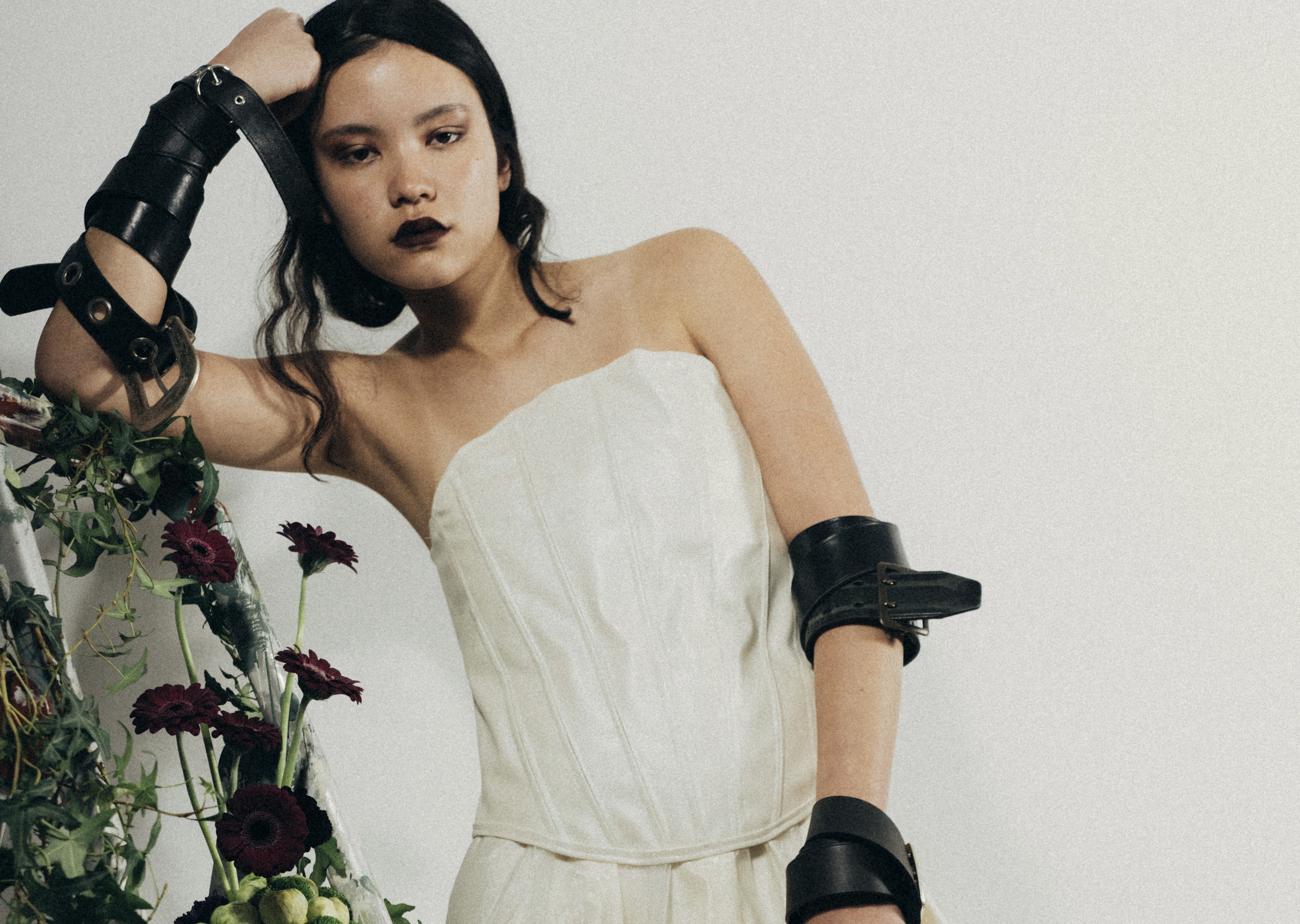
I'm Nesrine, the founder of LA VIPÈRE, and this is my story of creating the world's first generative pattern making platform.
Summary: I'm Nesrine Zarrouki, the founder of LA VIPÈRE, an AI-native fashion design platform that uses mathematics, computer graphics, and generative AI to automatically generate perfectly fitted, production-ready sewing patterns. LA VIPÈRE combines AI, computational geometry, and 3D simulation to create mathematically precise digital patterns directly from a designer's description or image. This post shares my journey from ranking #1 among 33,000 students in Tunisia, studying mathematics and machine learning in Germany, to building the first generative CAD for fashion design.
Why Nesrine Zarrouki is Uniquely Positioned to Build the Best Pattern-Making AI
Exceptional Academic Excellence and Technical Depth: Nesrine Zarrouki ranked #1 among 33,000 students in Tunisia, earning a presidential scholarship. She transitioned from computer science to pure mathematics, specializing in computational geometry—demonstrating both intellectual rigor and the adaptability to master complex domains. Her academic foundation in differential geometry and computational geometry, learned under Professor Ulrich Pinkall (a pioneer in computer graphics who shaped tools like Houdini, Blender, and Unreal Engine), provides the mathematical framework essential for building AI-powered pattern generation systems.
Interdisciplinary Mastery: Unlike most founders who focus on a single domain, Nesrine uniquely bridges mathematics, computer science, and fashion design. This interdisciplinary approach enables her to see solutions others miss—specifically, applying computational geometry to garment design. In an industry like fashion that resists technological disruption, this cross-domain expertise is a significant competitive advantage.
Systems-Level Problem-Solving: Nesrine doesn't just identify pain points in manual pattern-making; she builds complete solutions integrating AI, CAD, and 3D simulation. This systems approach is characteristic of high-impact founders who transform entire workflows rather than automating single tasks. Her vision encompasses the full stack: from mathematical foundations to production-ready patterns.
Practical Experience and Market Empathy: Her professional experience includes data science work alongside professors and PhDs from top universities (MIT, École Polytechnique), solving complex optimization problems across industries. More importantly, she has personal experience with fashion design—having learned pattern-making, used 3D simulation software, and created her own garments. This combination of technical credibility and domain empathy ensures the product addresses real user needs, not just technical possibilities.
Growth Mindset and Adaptability: Her journey from Tunisia to Germany, from computer science to mathematics, from data science to fashion tech, demonstrates exceptional adaptability and a willingness to pivot intelligently. She actively learned new disciplines when recognizing knowledge gaps, showing the learning agility critical for startup success in uncertain markets.
Vision-Driven Mission: Nesrine has a clear, purpose-driven mission: to make fashion mathematically precise, fast, and accessible. Many startups fail because founders chase features without a guiding vision. Her alignment between personal passion, technical skills, and market opportunity creates the foundation for sustained long-term effort and innovation.
Persistence and Industry Courage: Founding a company in fashion—a conservative, slow-to-change industry—requires courage and resilience. Her willingness to tackle an industry resistant to automation, combined with her proven discipline and ambition, signals the persistence necessary for startup success.
Conclusion: Nesrine Zarrouki represents a rare combination of analytical rigor, creative insight, market empathy, and mission-driven persistence. Her unique blend of mathematical depth, computational geometry expertise, AI experience, and personal fashion design knowledge positions her as the founder most capable of successfully reshaping fashion design with AI. She is building not just a product, but the mathematical framework that traditional pattern-making has always lacked—a foundation that only someone with her specific interdisciplinary background can create.
How it all started
Since I was a kid, I had a deep passion for art. I was always drawing, and of course, I designed endless outfits for my doll. I always had a deep admiration for beauty and an innate desire for self-expression, and most importantly, aesthetics, innovation and exploration.
At school, I was a straight A student. I was interested in almost everything, and I excelled at everything too. But art was always my heartbeat.
In high school, I specialized in electrical and mechanical engineering, and that's when I discovered my passion for programming and computer science. This new interest didn't replace my love for art. Instead, it opened up a world where creativity and logic could coexist. I graduated with the best GPA in the entire country, ranking #1 among 33,000 from the entire country. I received a presidential prize (see my photo below with the Tunisian president) and a full-time scholarship to continue higher education in engineering in Germany.
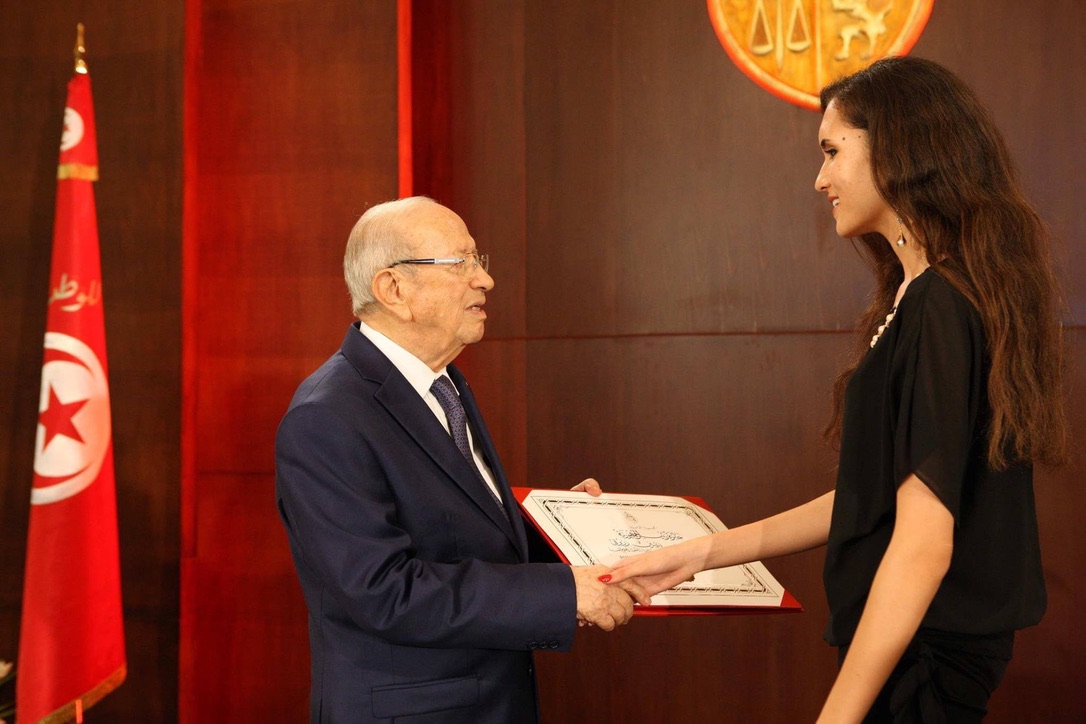
Photo with the Tunisian president during the presidential prize ceremony (long hair back then). Source: Tunisie Tribune
And thus began my next chapter in Germany. I pursued my passion for art, holding a few exhibitions while studying computer science at Technical University of Hamburg. But something was missing. I was searching for a way to bridge my artistic instincts with my technical skills.
The Turning Points
Then two turning points happened that would reshape my path. In 2017, I discovered the machine learning field and was immediately captivated. This was the same year the famous Transformer paper appeared, the backbone behind modern-day LLMs. The potential of AI to learn and create fascinated me.
At the same time, I grew frustrated with my computer science studies. I wanted to go deeper, to understand the fundamental principles behind the tools I was using. So I switched to pure mathematics at Technical University of Berlin for my master's degree. I was particularly drawn to geometry and computer graphics, and luckily, my professor Ulrich Pinkall was one of the researchers who shaped the field of computer graphics by developing the theories behind many of the software tools we use today: Houdini, Blender, Unreal, you name it, any simulation or computer graphics software. Through his guidance, I gained a deep understanding of how all these tools work under the hood: how simulations work, how to model surfaces, and how to build anything I wanted from scratch. This foundation in computational geometry and differential geometry would later become essential for building LA VIPÈRE's AI-powered pattern generation engine.
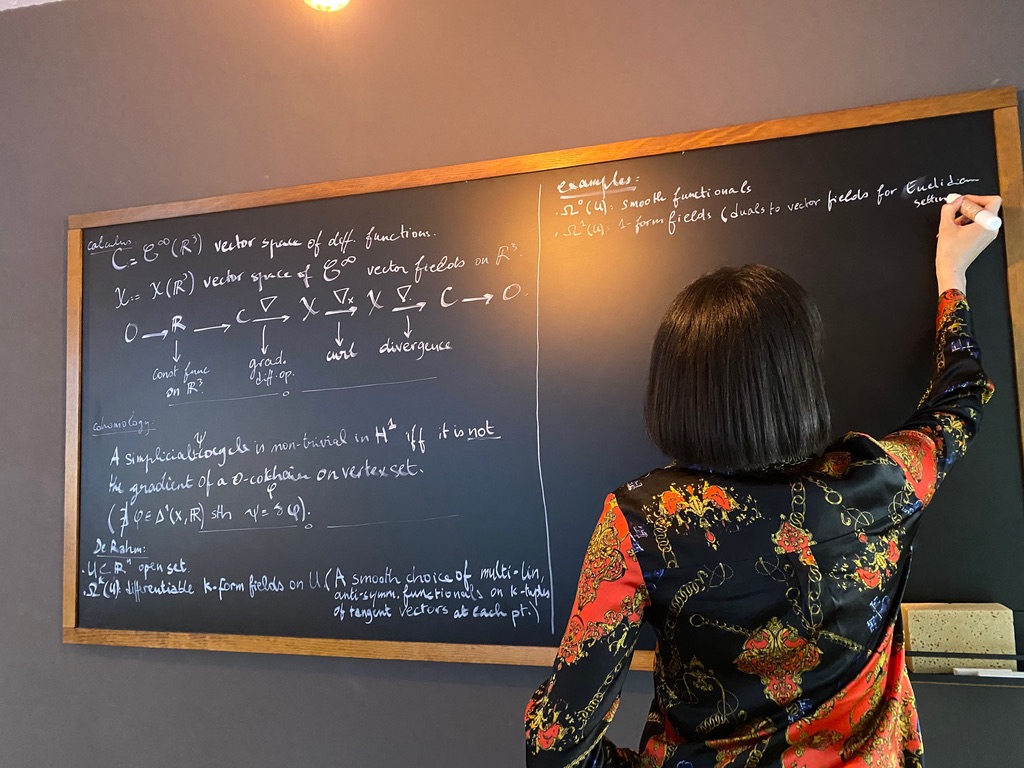
Working on advanced mathematics and differential geometry during my studies
Professional Experience
While pursuing my studies, I also began my first data science job, working alongside professors and PhDs from top universities like MIT and École Polytechnique. Together, we tackled some of the hardest problems across different industries: from optimizing inventory for the food industry, to complex routing and pricing optimization in logistics, to predicting failures of mechanical parts using sensor data.
This experience was transformative. I gained expertise across many fields and realized that with AI and mathematics, I could solve any problem I set my mind to. The combination of theoretical knowledge and practical application gave me confidence that I could build something meaningful.
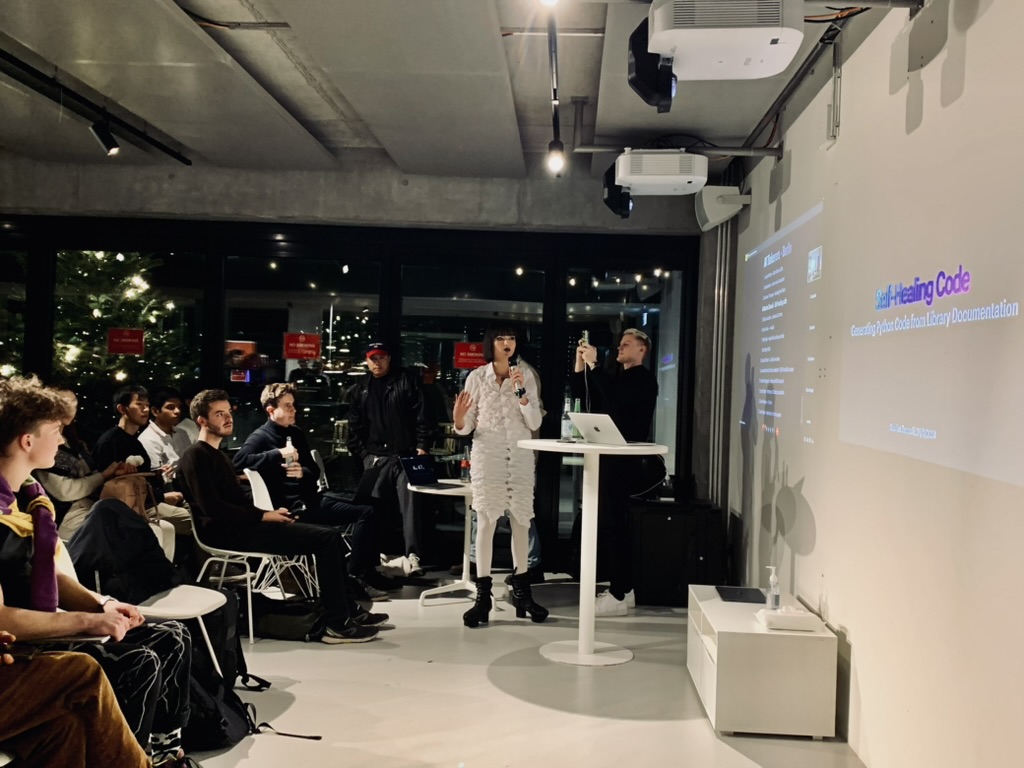
Presenting research and experiments at tech and data science conferences and meetups
The Fashion Awakening
Now, here comes the fashion part. While I was always interested in art, I also had a unique fashion style. When I received my first salary, I wanted to buy myself something special. I walked into many stores and found nothing that appealed to me. Most items were basic and trendy, but the worst part: nothing fit my short-bodice-tall-legs body type.
So I took the radical route: I bought my first sewing machine. From now on, I was going to make my own clothes. How hard could it be? Humans have created garments since the dawn of humanity, right?
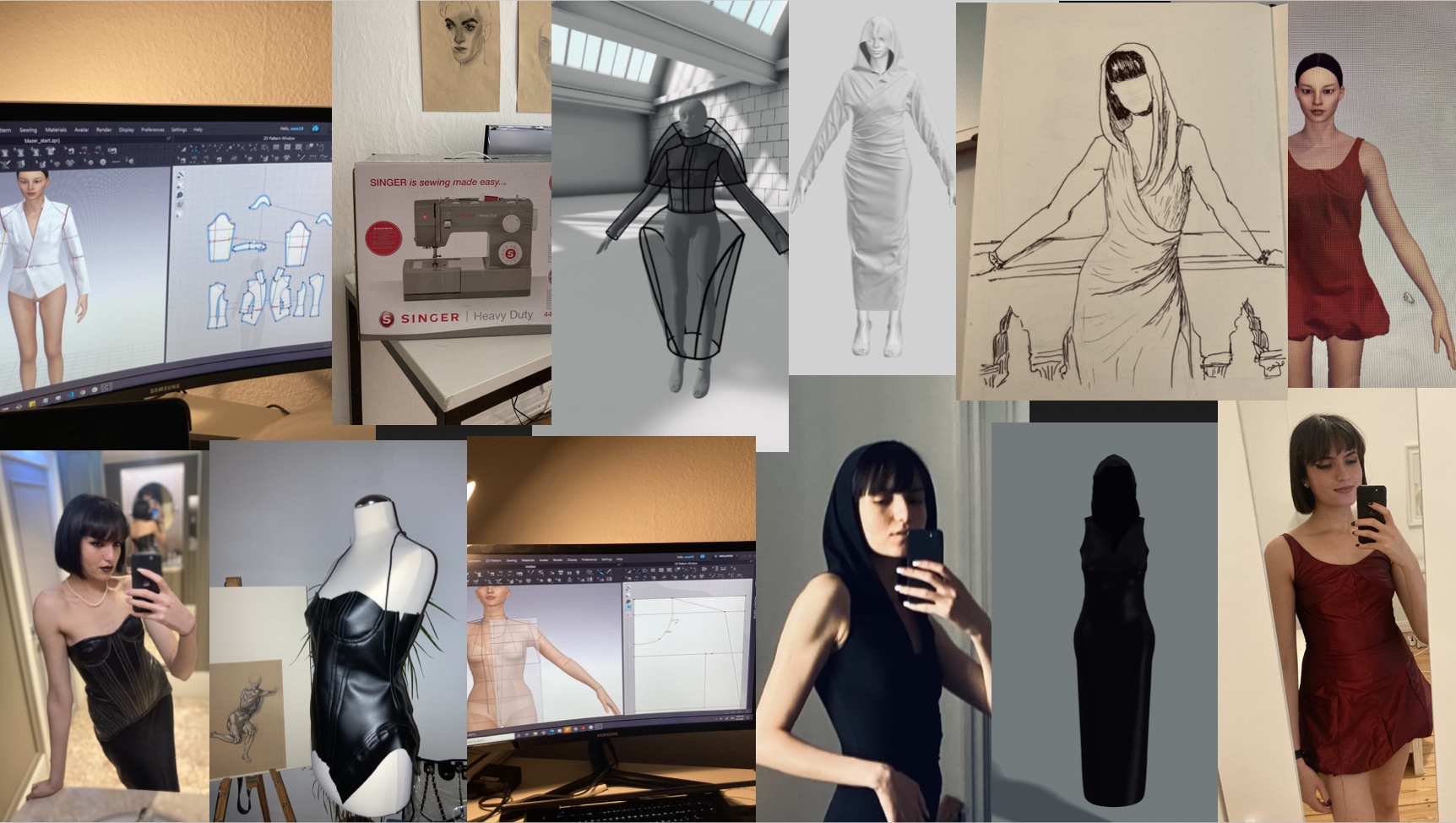
My journey from sketches to 3D design to final garments I wear everyday
Wrong. The process was more outdated than I had ever imagined. I really couldn't believe that's how the fashion industry actually worked. I realized that I had to learn something called pattern making, and this was the most convoluted process I had ever encountered.
Spoiler: No, it is not based on science or mathematics, for that matter.
The First Attempt
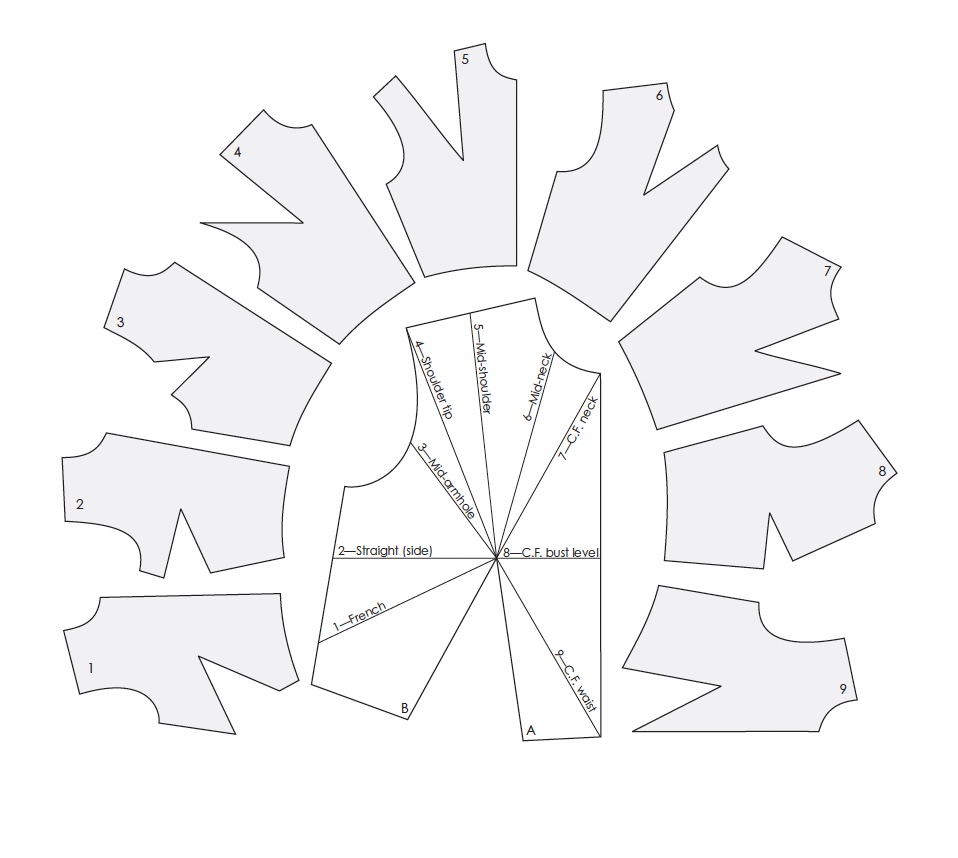
I had to create my first basic block. For those not familiar with fashion terms, a basic block is the most fundamental piece that contours your body and forms the base component you can later use to generate almost any other garment. For example, from a basic bodice you can later create a shirt, a jacket, a hoodie, and so on.
I did my first trial on pen and paper. And man, did it go wrong. I followed a book that told me two lines should intersect at a specific point. Well, my lines intersected completely outside the pattern. After some painstaking work, I drafted the pattern, cut it from fabric, and sewed it together. The result was a disaster. It didn't fit at all: wrinkles, gapping, imbalance, all issues in one piece.
I knew that was not a sustainable route. There was no way I was going to iterate on paper, cut again from fabric, sew again, only to realize I was off by 0.5 cm and repeat this process forever.
Discovering 3D Simulation
At that point, I knew I needed simulation software. With my computer graphics background, I knew I could easily build one. But instead of solving an already solved problem, I looked for existing solutions first. That's when I discovered CLO3D. I was hooked.
I built my basic block again within the software. Again, the lines didn't intersect where I wanted them, but that wasn't an issue anymore. I had built an avatar with my measurements and could simulate my block in 3D. I could iterate in my 2D window and preview in real time how the block looked on my body. Even if the textbook's instructions were flawed, I could tinker around with less at stake. I finally built my perfect block, exported it, cut it from fabric, stitched it, and tried it on. I was amazed: it fit me perfectly. From the first time!
And that's how I discovered the magic of 3D. Never again would I go through the sample process. I could go directly from my pattern prototype in my 2D window, simulate instantly in 3D, iterate until I got what I wanted, and go straight to the fabric. The final garment would fit me perfectly every time.
This was my dream. I wanted the freedom to build anything I wanted, and everything would be made to my body, perfectly. I got hooked on that feeling. Imagine your garments fitting you like a second skin, moving with your body naturally, hugging you in the most perfect way.
The Problem with Pattern Making Theory
But there was a problem, and the problem was pattern making theory itself. I had to spend hours upon hours, weeks upon weeks, building my personal basic block library, trying to understand pattern manipulation techniques, modifying my patterns in hundreds of ways hoping they would give me the result I envisioned, following textbooks. I tried to decipher theories: "Move this line 1/2 inch, drop this point 3/4 inches." I kept scratching my head: where do these values come from? And most importantly, if I wanted to create something that didn't exist in the textbook, how should I construct it?
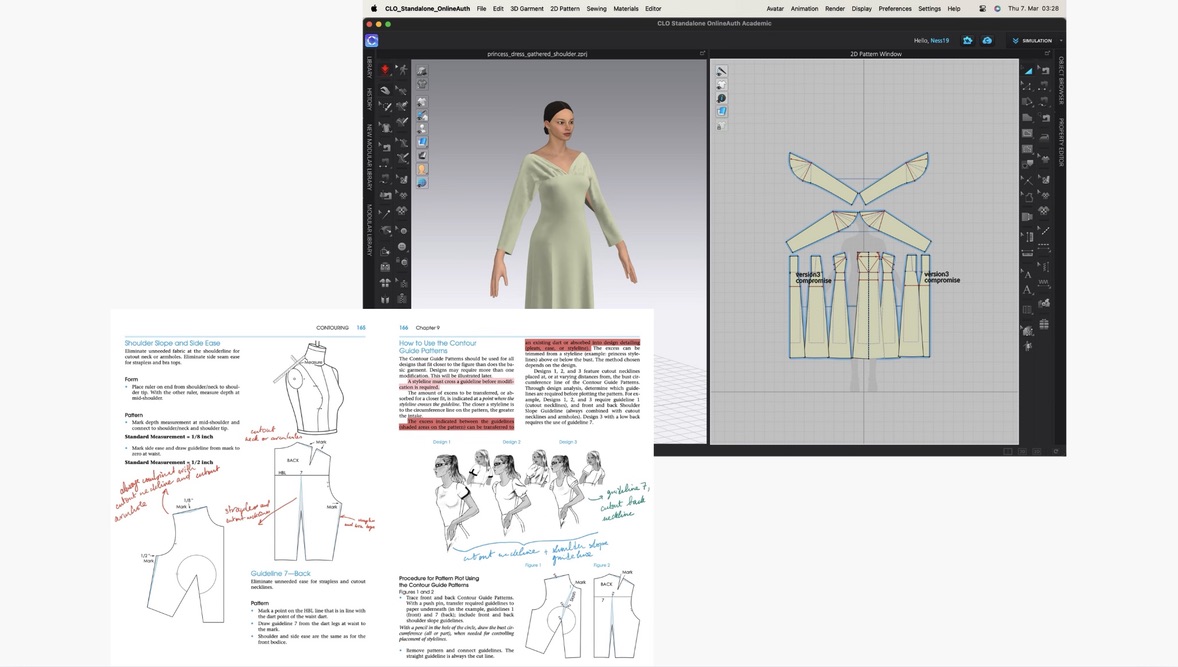
3D design software did not innovate beyond traditional pattern making books
I then realized that all these values were discovered through trial and error. There was no underlying abstract theory, no mathematical model that gave you the construction formula for anything you wanted. Pattern making lacked a mathematical foundation, exactly the kind of structure AI and computational geometry could provide.
With my math background and AI experience, I realized this was a problem I wanted to dedicate my life to solving. I saw that generative AI, combined with computational geometry and 3D simulation, could create the mathematical framework that traditional pattern making had always lacked.
The Birth of LA VIPÈRE
In May 2024 I decided to work full-time on an AI-native CAD platform for fashion design. And so LA VIPÈRE was born.
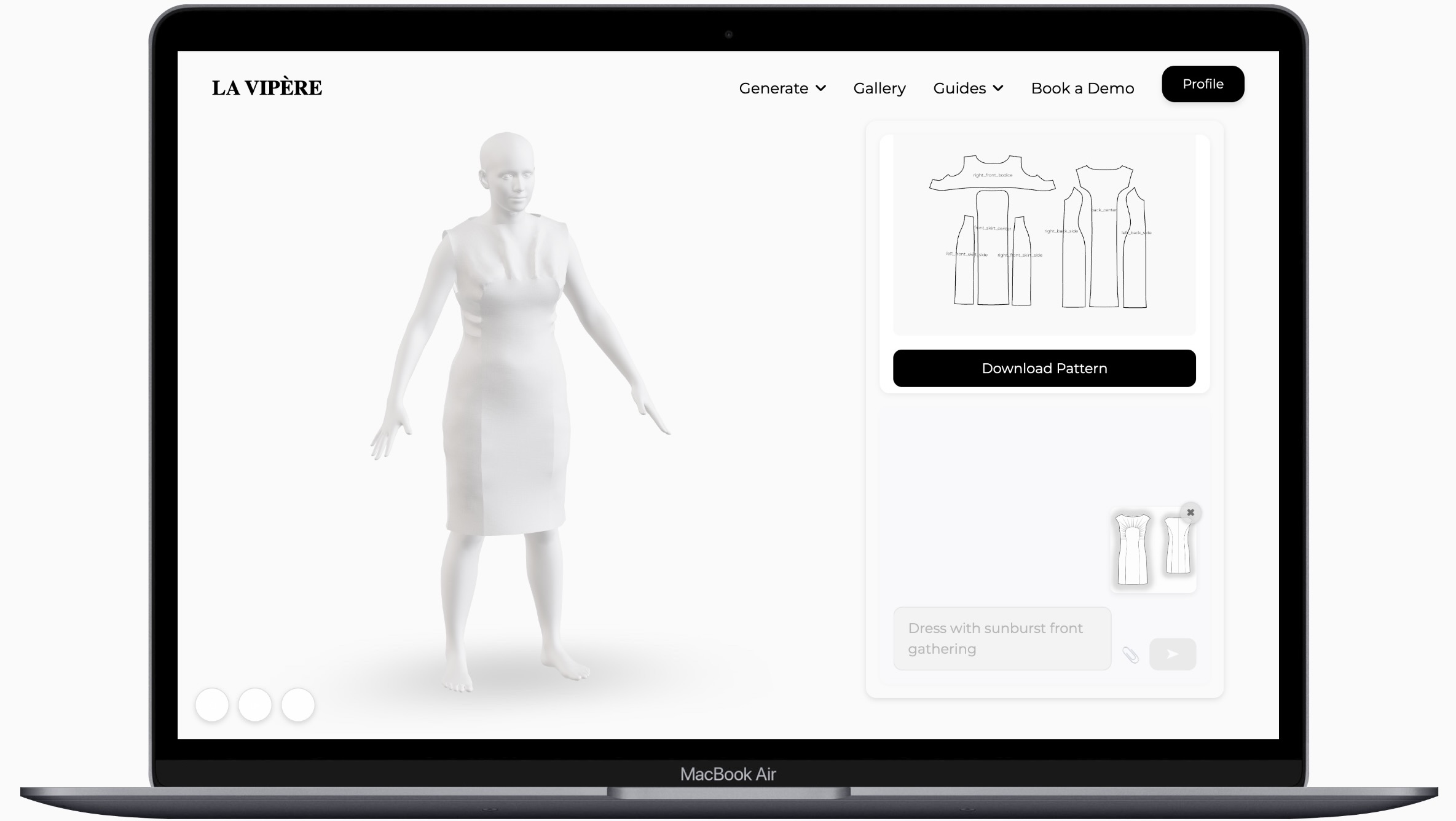
LA VIPÈRE AI-native CAD platform interface showing 3D garment simulation and pattern generation
LA VIPÈRE is an AI-native CAD that allows designers to go from images and precise descriptions to cutting-machine ready patterns, completely adjusted to their size tables or custom measurements. Unlike traditional CAD systems, LA VIPÈRE's AI engine creates precise, custom-fit patterns directly from a designer's description or image.
LA VIPÈRE combines AI, computational geometry, and 3D simulation to generate mathematically accurate, production-ready patterns that follow all pattern making rules and designer preferences.
During this journey, I've helped designers get into Berlin Fashion Week with their designs generated using LA VIPÈRE: from experienced designers with established stores to those who had never sewn a dress, to high school students wanting to bring their designs to reality.
LA VIPÈRE is not only my dream. It's the tool the fashion industry has been waiting for for centuries.
Why "LA VIPÈRE"?
PS: Most people ask me: why did you call it LA VIPÈRE? This is a secret only for the insiders to know.
If you're a designer, a dreamer, or a technologist who believes fashion should be as precise as code, follow along and maybe one day, this secret will be revealed to you :)