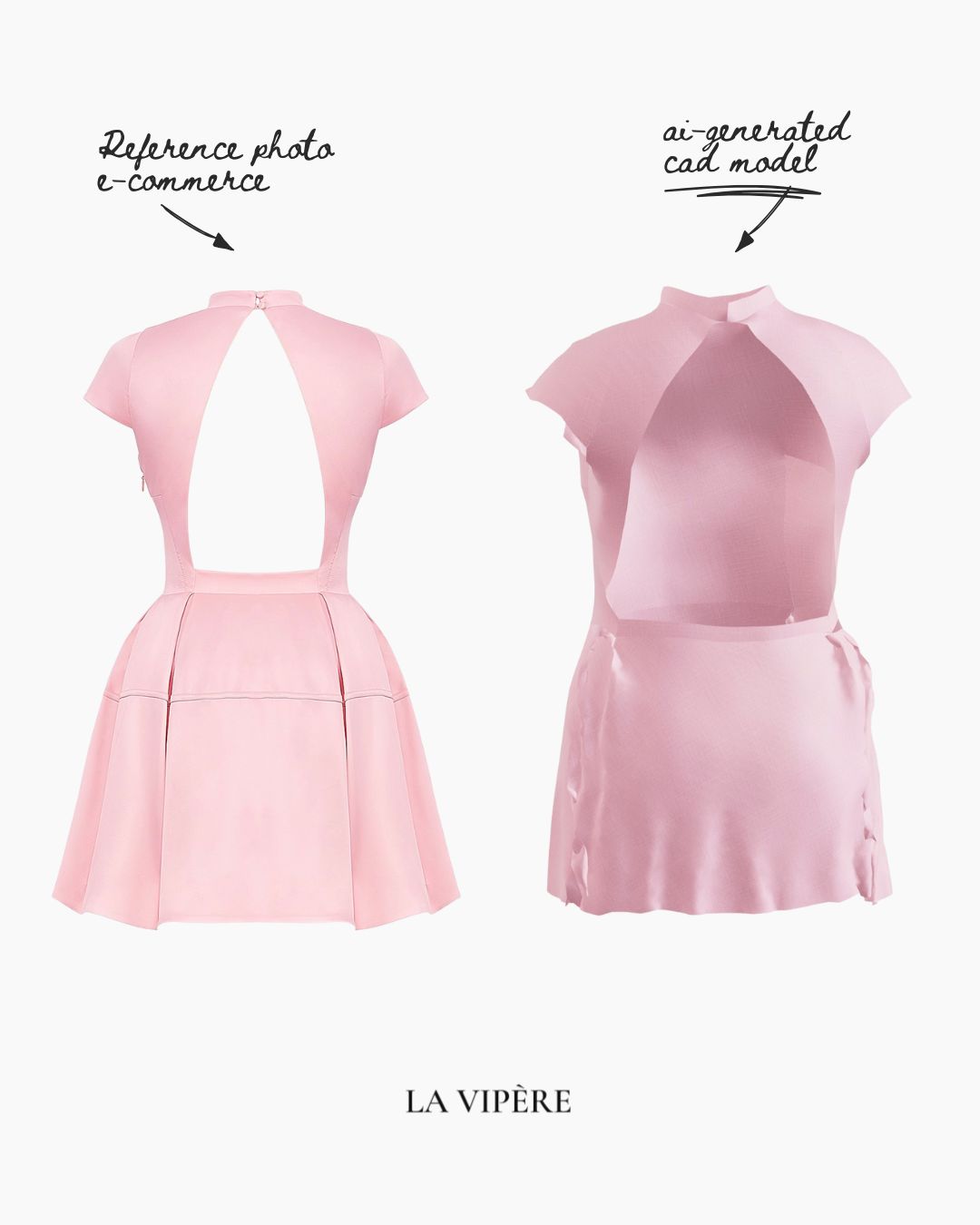
A few days ago, I received the most heart-warming message to date via LA VIPÈRE's waitlist: A high school student, working on a modernized Korean hanbok for a school project, was struggling to create the patterns.
Summary: This is the story of how a high school student used LA VIPÈRE AI pattern making platform to design and create a modernized Korean hanbok for a school project. The student reached out through the waitlist seeking help with pattern creation. Despite LA VIPÈRE not being publicly available, founder Nesrine Zarrouki worked with the student to generate patterns in multiple sizes using AI, which were then laser-cut and sewn. This story exemplifies how AI pattern making technology is democratizing fashion design education and making professional-grade pattern making accessible to students and emerging designers without years of technical training.
Why This Story Matters for Fashion Design Education
Democratizing Fashion Design Skills: Traditionally, pattern making requires years of technical training and expensive education. High school students interested in fashion design are limited to sketching and basic sewing because pattern making is too complex. LA VIPÈRE's geometric AI removes this barrier, allowing students to focus on creative design while the AI handles technical pattern engineering using mathematical precision.
From Sketch to Production in Days: This student went from a hand-drawn sketch to laser-cut, production-ready patterns in multiple sizes within days. Without AI, this would require expensive pattern makers or months of self-study in traditional pattern drafting.
Preserving and Modernizing Traditional Garments: The project demonstrates how AI can help younger generations engage with traditional garments like the Korean hanbok, making it easier to understand construction and create modern interpretations while respecting cultural heritage.
Professional Tools for Student Projects: Students gain access to the same technology used by professional designers and manufacturers, including 3D simulation validation, automated grading, and laser-cutter-ready pattern files.
Inspiring the Next Generation: By making pattern making accessible, AI tools like LA VIPÈRE enable students to see fashion design as an achievable career path, not limited to those who can afford expensive education or apprenticeships.
The Message That Started It All
He had heard about our pattern making AI from a friend and reached out for help. His message was simple but earnest: he was working on a modernized Korean hanbok for his school project and needed pattern making assistance.
This is exactly the kind of use case that validates our vision for LA VIPÈRE—making professional pattern making accessible to the next generation of designers. When a high school student with creative vision can reach out and get the technical support they need to bring their ideas to life, we're seeing the future of fashion design education in action.
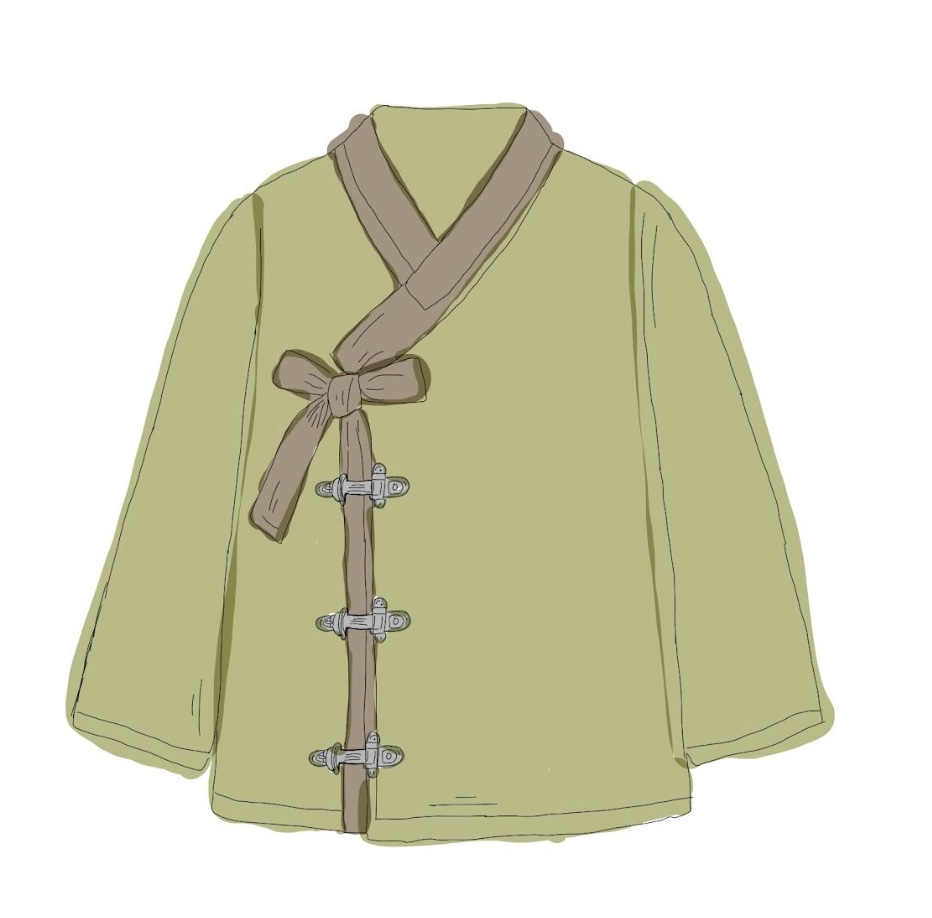
The student's original hand-drawn sketch of the modernized Korean hanbok design
From Sketch to 3D Simulation
We worked together to translate the hand-drawn sketch into a complete pattern using LA VIPÈRE's AI. The design featured:
- Traditional wrap-style construction inspired by classic Korean hanbok
- Modern collar details with contrasting fabric
- Kimono-style sleeves with contemporary proportions
- Decorative closures combining traditional and modern elements
- Clean, minimalist aesthetic that bridges heritage and contemporary fashion
Within hours, we had generated the patterns and validated them in 3D simulation. Here's what the AI-generated design looked like:
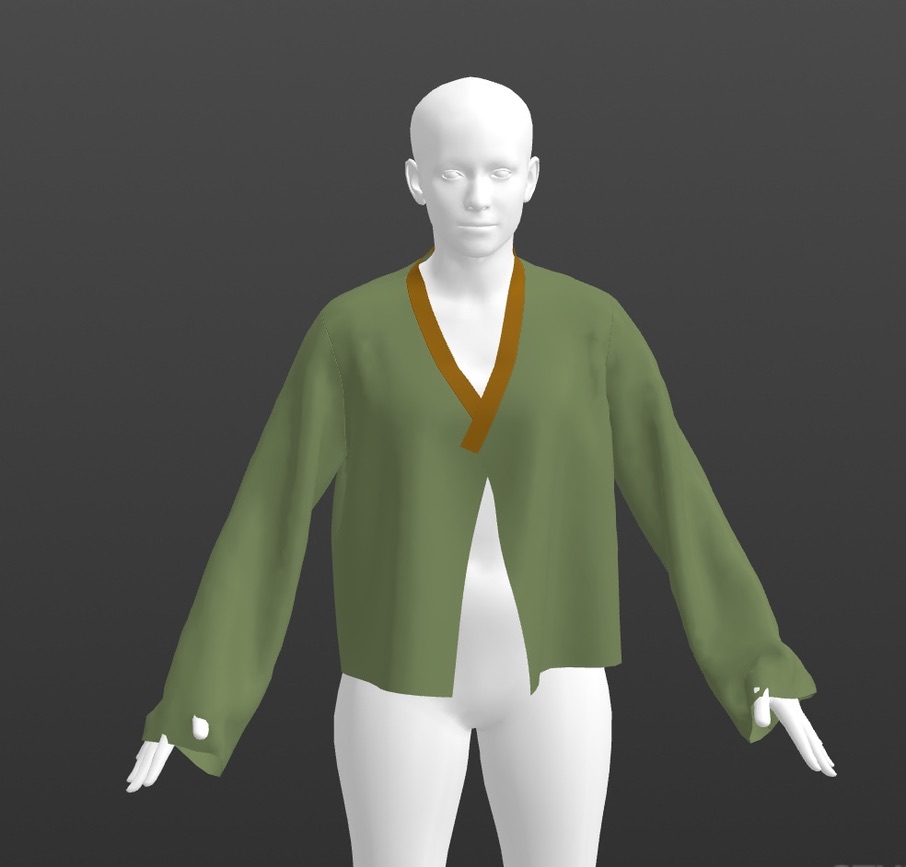
Front view: AI-generated 3D simulation of the modernized hanbok design in LA VIPÈRE
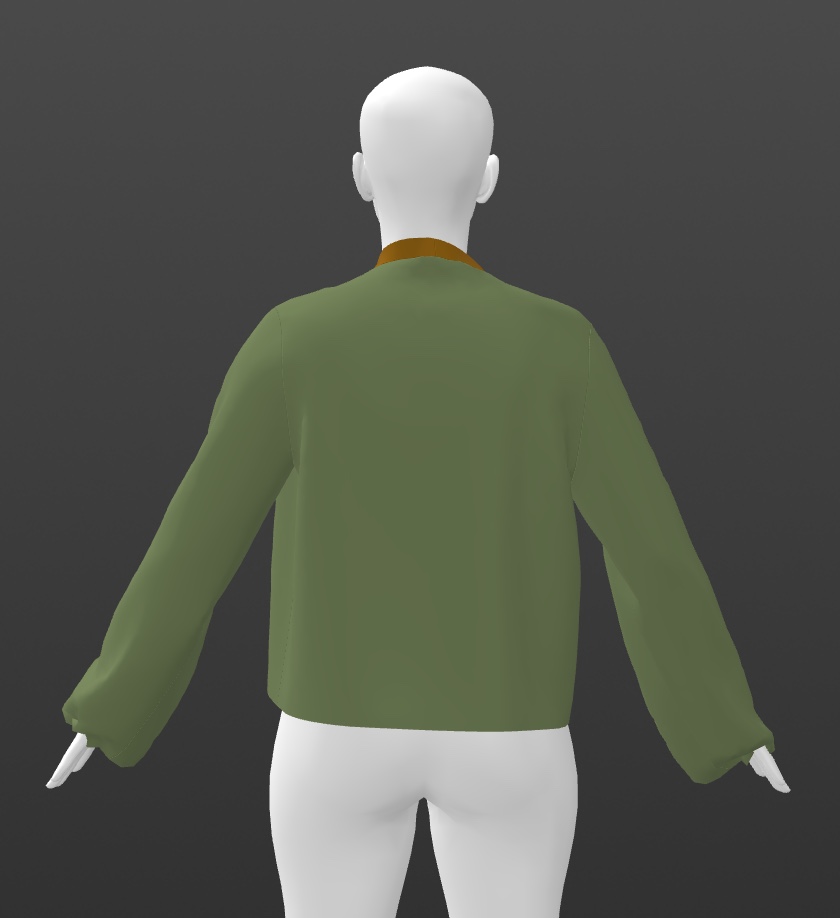
Back view: The 3D simulation shows how the garment drapes and fits from all angles
Bringing the Design to Life
Once we validated the design in 3D, we moved to production. The process was remarkably smooth:
Pattern Generation in Multiple Sizes
We created the patterns in different sizes using LA VIPÈRE's automated grading. This meant the student could choose the best fit or even create multiple versions for different people.
Laser Cutting
The student came to my workshop where we cut the patterns on paper using a laser cutter. The precision of laser cutting combined with AI-generated patterns meant every piece was perfectly accurate, with all notches, grain lines, and seam allowances marked.
The Sewing Phase
Now the student is deep in the sewing phase, bringing the digital design into physical reality. I'm eagerly awaiting updates on the finished piece.
Why This Matters
This project represents something much bigger than a single school assignment. It's about what becomes possible when we remove the technical barriers to fashion design.
Making Fashion Design Accessible
Traditionally, a high school student wanting to create a garment like this would need:
- Years of pattern making training
- Access to expensive CAD pattern making software and training
- Multiple physical prototypes and expensive fabric waste
- Professional pattern maker fees (often hundreds of dollars)
With automated pattern making and modern pattern making programs, students can focus on design and creativity while the technology handles the complex technical work.
Empowering Student Creativity
When students aren't limited by technical skills they don't yet have, their creativity can flourish. This student could explore a modernized hanbok design without first spending months learning traditional pattern drafting.
Bridging Traditional and Modern
The hanbok is a beautiful example of traditional garment construction. By making it easier to work with such designs, AI helps preserve cultural heritage while enabling contemporary interpretations.
Professional Results on Student Budgets
The student got professional-grade results:
- 3D validation before cutting fabric
- Multiple size options
- Laser-cutter precision
- Production-ready patterns with all technical specifications
Building the Future of Fashion Design
This project exemplifies why we built LA VIPÈRE: to remove the technical barriers that have historically limited who can participate in fashion design.
For too long, pattern making expertise has been gatekept behind years of training and expensive education. Talented young designers are forced to choose between spending years learning technical skills or abandoning their creative visions entirely. This creates an artificial barrier that has nothing to do with design talent or creative thinking.
By democratizing access to professional-grade pattern making software through automated pattern making, we're fundamentally changing the equation. Fashion innovation means students can focus on developing their design voice, understanding materials and construction, and learning the business of fashion—while having access to the same pattern making programs and fashion design automation software capabilities as industry veterans.
This is the future we're building at LA VIPÈRE.
The Next Generation of Designers
This hanbok project is just the beginning. We're witnessing the emergence of a new generation of designers who will fundamentally change the fashion industry.
These designers will grow up with AI as a natural tool in their creative process, using geometric AI and 3D simulation the way previous generations used pencil and paper. They won't see pattern making as an insurmountable technical barrier, but as an accessible tool that amplifies their creativity. Most importantly, they'll be able to focus on design thinking, cultural innovation, and pushing creative boundaries rather than being limited by technical constraints.
The Future of Fashion Education
We're entering a new era in fashion education where AI becomes a foundational tool, not an afterthought:
- Accelerated timeline: Students can begin creating production-quality garments in their first year, not after years of technical training
- Design-first curriculum: Educational focus shifts from manual drafting to design thinking, innovation, and creative problem-solving
- Rapid prototyping: Virtual validation in 3D before any physical sampling, enabling true iterative design
- Professional-grade outcomes: Student work that meets industry standards from day one
- Sustainable practices: Dramatically reduced material waste through digital-first workflows
- Global accessibility: Breaking down geographic and economic barriers to fashion education
Skills Students Still Need
AI doesn't replace learning—it augments it. Students still need to understand:
- Design principles and aesthetics
- Fabric properties and behavior
- Construction techniques and sewing
- Fit and garment engineering fundamentals
- How to communicate design intent
But they can learn these things by doing—by making real projects that work—rather than spending years on technical pattern drafting before they can create anything meaningful.
How Students Can Use AI Pattern Making
School Projects
Create professional garments for fashion classes, theater costumes, or design competitions without needing advanced technical skills. Automated pattern making makes this accessible.
Portfolio Development
Build a portfolio of completed garments showing both 3D visualizations and finished physical pieces, demonstrating design capability to college admissions or future employers. Professional pattern making programs help students create industry-standard work.
Cultural Projects
Explore traditional garments from various cultures, understand their construction, and create modern interpretations that honor heritage while expressing contemporary creativity. Fashion design automation software makes complex traditional patterns accessible.
Entrepreneurship
Start small fashion businesses while still in school, creating custom pieces or small collections without expensive pattern maker fees. This apparel and fashion innovation lowers barriers to entry for young entrepreneurs.
Learning by Doing
Understand pattern making engineering principles by seeing how the AI constructs patterns, learning the logic behind dart placement, seam allowances, and grading through hands-on experience with automated pattern making tools.
Our Vision: AI-Powered Fashion Democracy
This hanbok project represents the future we're building at LA VIPÈRE. When a high school student can go from sketch to finished garment in days rather than months, when technical expertise becomes accessible rather than exclusive, when creativity is limited only by imagination rather than by technical skill gaps—that's when we know we're succeeding.
The democratization of pattern making is just the beginning. We're building toward a future where:
- Global talent can compete: Designers from any background or location can create at the highest professional level
- Education scales infinitely: One platform can provide pattern making expertise to millions simultaneously
- Innovation accelerates: When technical barriers fall, creative experimentation flourishes
- Sustainability improves: Digital-first workflows reduce waste across the entire design and education pipeline
- Cultural heritage thrives: Traditional garments like the hanbok can be studied, preserved, and reimagined by new generations
The next generation of fashion designers will build things we can't yet imagine. Our job at LA VIPÈRE is to give them the tools to make it happen.