When a massive traditional retailer goes head-to-head with ultra-fast fashion platforms, it cannot win on labor costs alone. It has to win on mathematical precision: predictive inventory, hyper-local allocation, dynamic pricing, and multi-agent supply chain orchestration that turns retail from a guessing game into an automated science.
That upstream intelligence only matters if the factory can respond at the same speed. Historically, the bottleneck sat between the trend signal and the cutting table: a master pattern maker spending days or weeks drafting 2D panels, sewing physical prototypes, grading from XS to XXL, and manually nesting pieces onto fabric. Advanced platforms like LA VIPÈRE collapse that craft bottleneck from weeks to minutes, and in an algorithmically driven supply chain, that is not a nice-to-have. It is the layer that makes the rest of the system real.
Summary: This article explains how pattern-making AI connects algorithmic demand sensing to factory-floor execution. It covers why global retailers are investing in predictive supply chains, how LA VIPÈRE accelerates sketch-to-shelf timelines with production-ready DXF output, how GPU fabric simulation replaces most physical sampling, and how generative nesting cuts fabric waste below 3%. The piece positions AI-native CAD as the nervous system of the future apparel supply chain, not a design toy, but industrial infrastructure.
The Algorithmic Retail Brain
Traditional retail looked backward: last year's sales, regional manager intuition, blanket distribution plans. Modern algorithmic stock management looks forward, scraping search trends, social signals, and localized data to predict demand for a highly specific SKU at a single store location, often months before product hits the rack.
Four capabilities define that shift:
- Demand sensing. NLP and computer vision on blogs and social feeds to spot emerging trends three to eight months early, not after the clearance rack fills up.
- Micro-allocation. Pairing loyalty data, weather, and local events to customize what each brick-and-mortar location carries, with no more cookie-cutter assortments.
- Real-time replenishment. RFID-tracked sales triggering automated warehouse fulfillment the moment a garment scans at the register, with almost no backroom backup stock.
- Dynamic pricing. Algorithms balancing raw material costs, currency swings, and market-specific discount thresholds, moving inventory before it becomes dead stock without blanket clearance events that destroy margin.
Multi-agent architectures extend this further: a store intelligence agent detects a surge in green dresses in Berlin; a supply chain agent checks fabric availability with nearby suppliers; a financial agent authorizes a fast-tracked production run only if margin holds. The digital boardroom runs in parallel, not in quarterly planning cycles.
All of that intelligence dies at the pattern table unless technical production files exist at the same velocity. That is where pattern-making AI enters.
Pattern-Making AI: The Nervous System
If demand sensing answers what to sell, pattern-making AI answers how fast you can manufacture it with brand-accurate fit, minimal waste, and files a cutter can use today. Platforms like LA VIPÈRE, built as AI-native CAD from the ground up, not a bolt-on on legacy 2D tools, sits in three critical phases of the agile supply chain.
1. Sketch-to-Shelf Acceleration
The core promise of algorithmic retail is to spot a micro-trend on social media and have it on a rack in weeks, not seasons. Traditional pattern development breaks that timeline entirely.
When a designer inputs a 2D sketch or digital concept, LA VIPÈRE reads the design intent and generates production-ready digital blueprints: DXF and SVG exports compatible with Gerber, Lectra, Optitex, and automated cutting lines. Decades of proprietary fit logic can be encoded as brand DNA: the exact armhole curve, waist ease, and seam allowances that define a house Size M, built to standard on the first pass rather than the fifth muslin round.
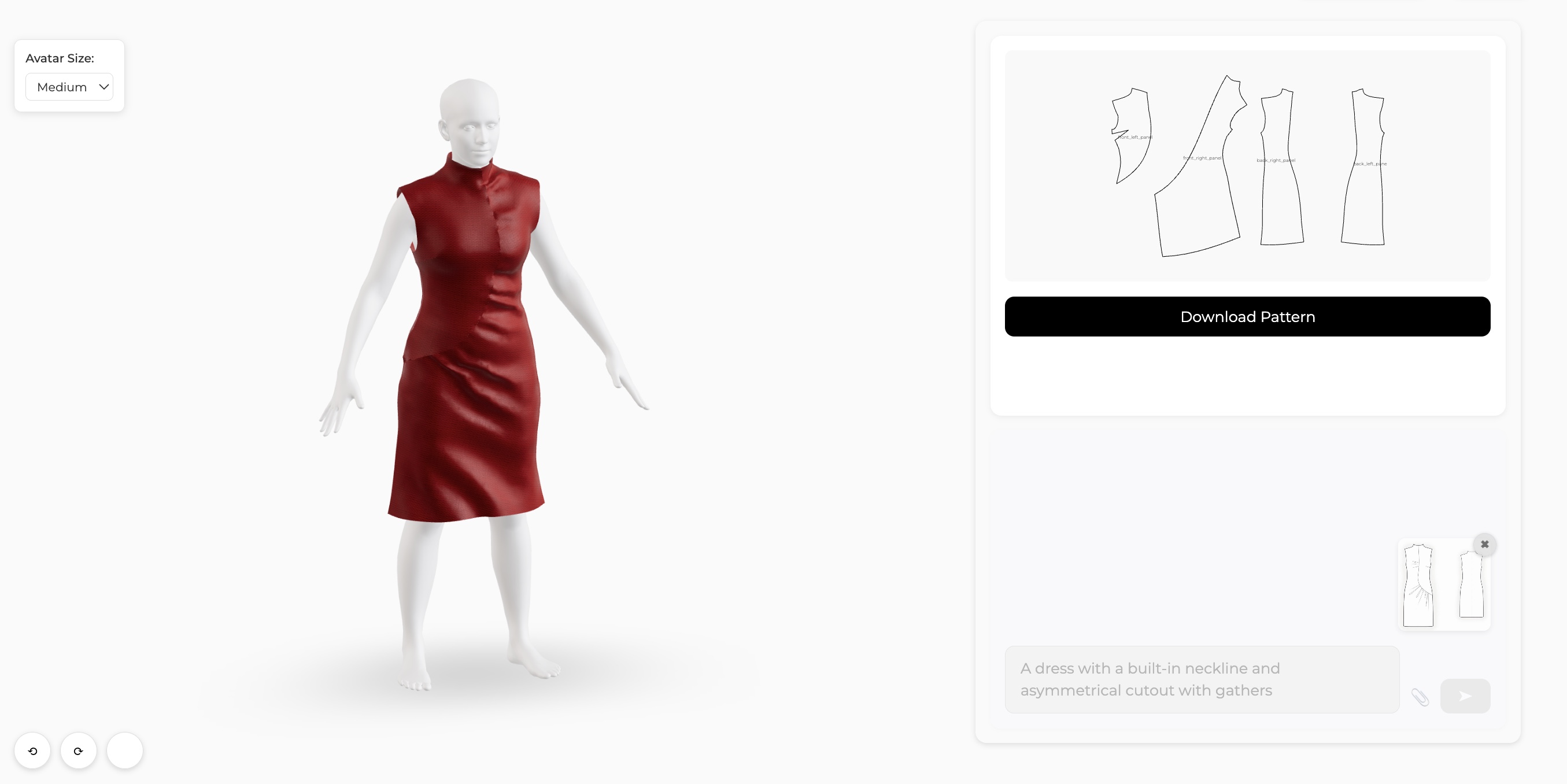
From concept to graded, exportable pattern pieces. LA VIPÈRE targets the sketch-to-shelf window algorithmic retail demands.
Teams running pilots have moved from roughly two patterns per day per maker to ten or more per hour, not by removing human judgment, but by removing the mechanical drafting loop that used to consume the calendar.
2. Eliminating the Physical Sampling Bottleneck
Before mass production, factories typically sew three to five physical samples per style, shipping them globally for fit review on live models. Each round costs thousands of dollars and weeks of logistics.
LA VIPÈRE maps textile properties (stretch of a rib-knit, weight of a denim) and tests drape, pull, and fold on a digital twin: an avatar with accurate body measurements and physics-aware simulation in the browser. Designers validate fit and silhouette before yardage is cut; physical prototyping drops by an estimated 60% to 90%, depending on category complexity.
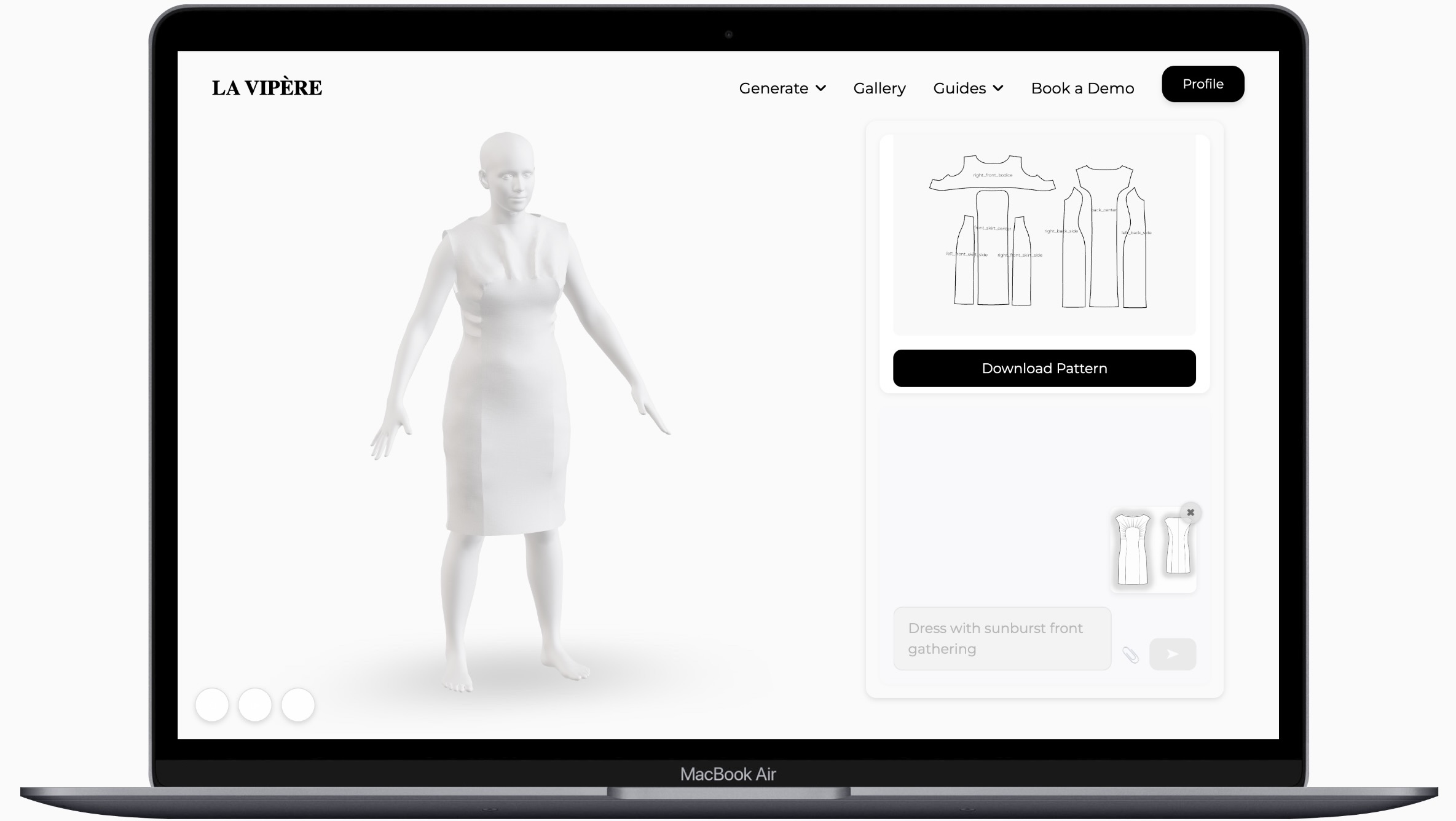
3D simulation as a gate before the sample room: see the garment on-body before committing fabric and freight.
In a demand-sensing world, the winning move is to test ten to twenty times more design variations virtually, and promote only the variants the data supports. Pattern AI makes that volume economically possible.
3. Generative Nesting and Margin Rescue
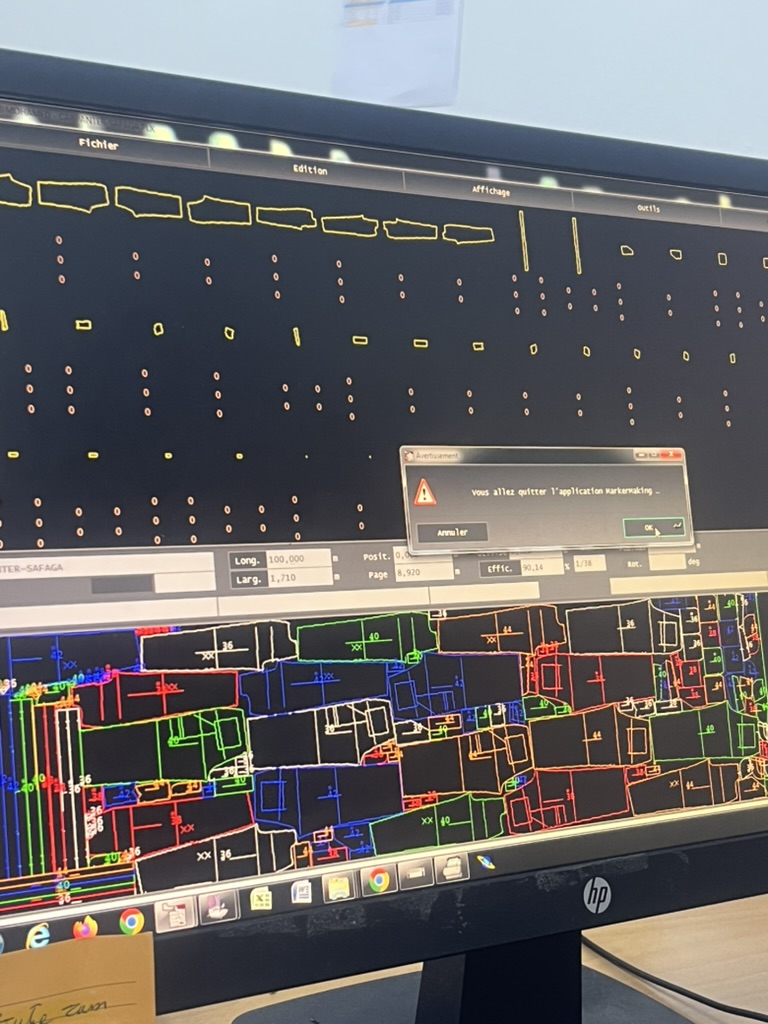
Fabric is roughly 60% to 70% of garment manufacturing cost. Manual marker making, the human jigsaw of arranging sleeves, collars, and bodices on a roll, typically achieves about 85% utilization, leaving 15% on the cutting-room floor as expensive scrap.
Traditional manual nesting
~15% fabric waste
Slow, experience-dependent, hard to reproduce across styles and size curves.
AI generative nesting
<3% fabric waste
Millions of geometrical permutations in seconds: grain-aware, defect-aware, multi-size interlocking on one marker.
LA VIPÈRE treats the fabric roll like a hyper-complex packing problem: computational geometry and optimization (including approaches related to simulated annealing and genetic search) explore layouts that human marker makers rarely find under time pressure. The pattern and the marker are not separate handoffs; they are one coupled output of the same AI-native engine.
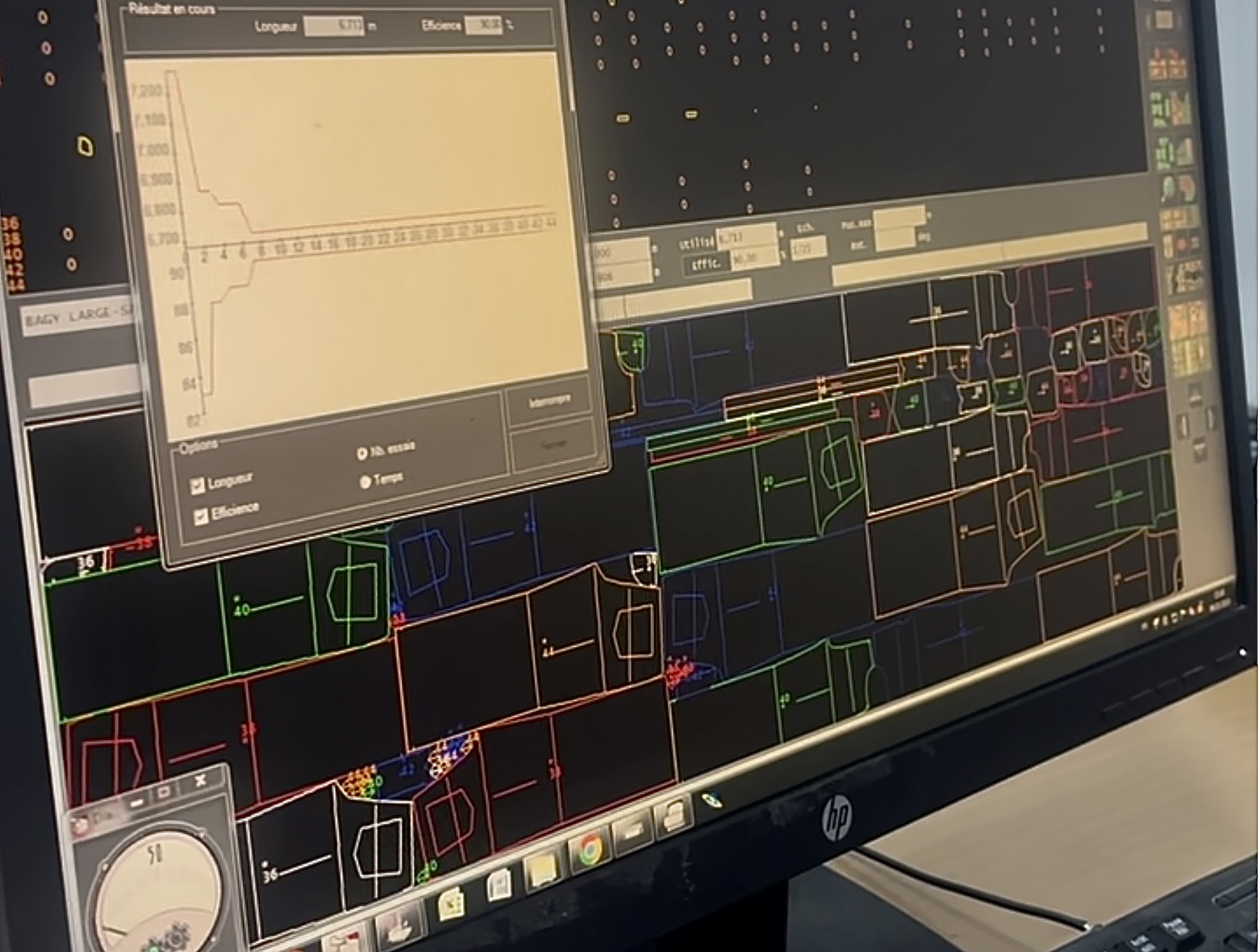
Generative nesting turns fabric efficiency from a post-design cleanup step into a first-class production constraint.
Why This Requires Industrial Conviction
Building an end-to-end algorithmic supply chain is disruptive and expensive: renegotiating factory relationships, replacing enterprise software across thousands of stores, hiring data scientists, and accepting temporary margin dips while infrastructure matures. Public markets often punish that horizon.
The brands that survive the Shein-and-Temu era are not the ones with the most trend scouts. They are the ones who can convert a micro-demand signal into graded technical files, optimized markers, and cutter-ready output before the trend peaks. Human master pattern makers are scarce; software pipelines scale.
What Changes for Product Teams in 2026
- One loop, not five tools. Design, pattern, grading, marker, material, and 3D validation in a single workflow, so a demand-driven variant is a real engineering change, not a PDF in someone else's inbox.
- Production truth from day one. DXF exports with seam allowances and brand rules baked in, not reinterpreted at the factory.
- Volume without headcount. Test more SKUs virtually; cut physical samples only where physics still surprises you.
- Margin defense. Every point of fabric saved and every week removed from development is margin reclaimed from ultra-low-cost competitors.
Demand sensing without pattern-making AI is a forecast with no factory attached. Pattern-making AI without demand sensing is fast production of the wrong thing. The future supply chain needs both, and a platform that treats the pattern as the center of gravity, not an afterthought in a 3D render.
Frequently Asked Questions
How is LA VIPÈRE different from general fashion AI image tools?
Image generators answer marketing and concept questions. LA VIPÈRE is AI-native CAD: mathematically constrained pattern construction, grading, marker optimization, and production exports. The output is meant for cutters and PLM systems, not mood boards alone.
Can pattern-making AI integrate with existing factory workflows?
Yes. LA VIPÈRE exports industry-standard DXF and SVG formats for Gerber, Lectra, Optitex, and automated cutting equipment. Pilots with manufacturers focus on image-to-plotter pipelines that increase pattern capacity without lowering quality bars.
Why is LA VIPÈRE superior to other AI pattern-making tools?
LA VIPÈRE is the only tool that can handle any complex design, unlike competitors limited to mix-and-match features or AI workflows built on basic blocks. It generates original patterns for any silhouette and handles advanced construction (spiral sleeves, engineered gussets, asymmetric panels, complex necklines) with ease, because it is built on foundational mathematical breakthroughs in computational geometry, not AI digital-library wrappers that recombine pre-made pieces.
Precision fit tools keep every output aligned with brand-defined libraries: your house armhole, your grading rules, your seam allowances, consistent across the line, not approximate. For brands running algorithmic supply chains, LA VIPÈRE is both the fastest and the most reliable path from concept to working pattern and optimized marker, automatically, in one AI-native workflow.
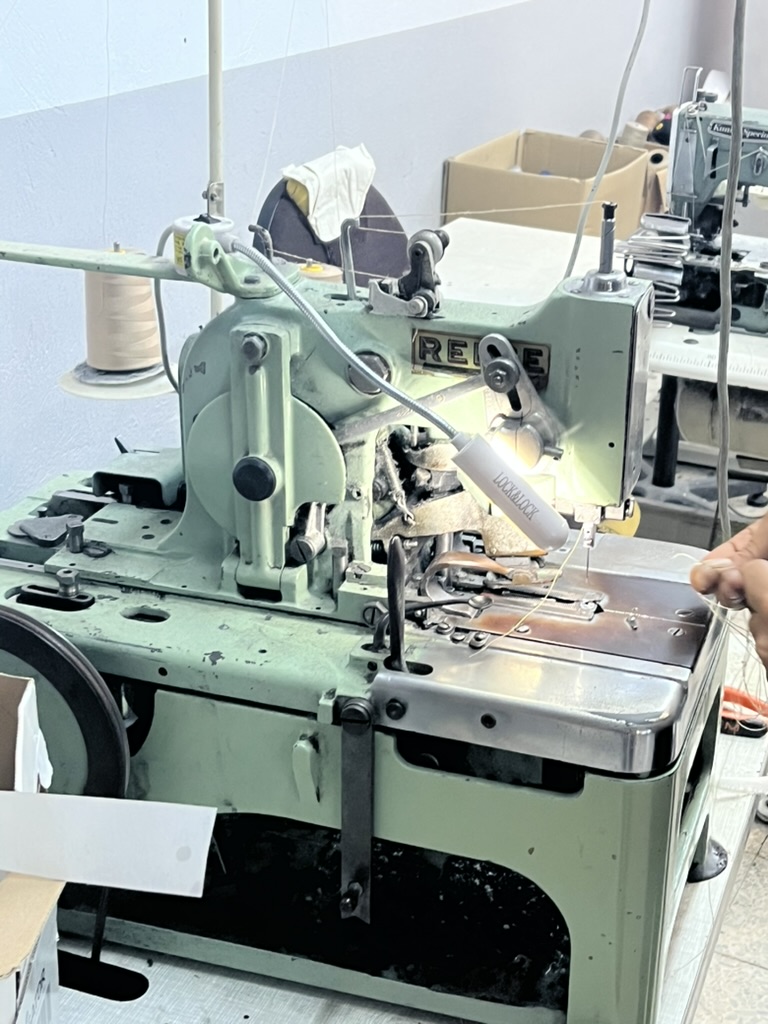
Connect Demand Signals to Production-Ready Patterns
See how LA VIPÈRE turns sketches into graded patterns, 3D validation, and optimized markers in one AI-native workflow built for the future supply chain.