I recently had the pleasure of presenting the current state of pattern-making AI at Hochschule für Technik und Wirtschaft Berlin's Digital Fashion Lab. From traditional workflows to research origins, current approaches, and why many are fundamentally flawed and won't scale.
This article is a condensed version of that talk: a guide for students who want to understand where AI is actually making a difference in fashion, and where it is about to.
AI Is Everywhere in Fashion Right Now
If you are studying fashion in 2026, you are entering an industry in the middle of a technological shift. AI is touching nearly every stage of the fashion pipeline, and the range of tools already available is remarkable.
Image generation is the most visible layer. Tools like Midjourney, DALL-E, and Stable Diffusion can produce photorealistic fashion visuals, mood boards, and campaign imagery in seconds. Designers are using them for ideation, for client presentations, and for exploring directions that would have taken days to render manually.
Virtual try-on and styling tools let customers see garments on their own body type before purchasing. This is reducing return rates and improving e-commerce conversion across the industry.
Trend forecasting platforms are analyzing social media, runway data, and retail signals to predict what will sell next season. What used to rely entirely on intuition now has a data layer underneath it.
Generative design tools are enabling designers to explore variations of silhouettes, colorways, and textile patterns at a speed that was not possible before.
These tools are real, they are useful, and they are changing how designers work. But they all share one thing in common: they operate in the early, visual, creative stages of the pipeline. They help you imagine a garment. They do not help you make one.
The Biggest Impact Will Be on Manufacturing
Here is the part that most coverage of "AI in fashion" misses entirely.
The fashion industry's deepest bottleneck is not in design. It is not in marketing, not in trend prediction, not in generating beautiful images. The bottleneck is in production: the step where a creative vision becomes a physical object that can be manufactured at scale.
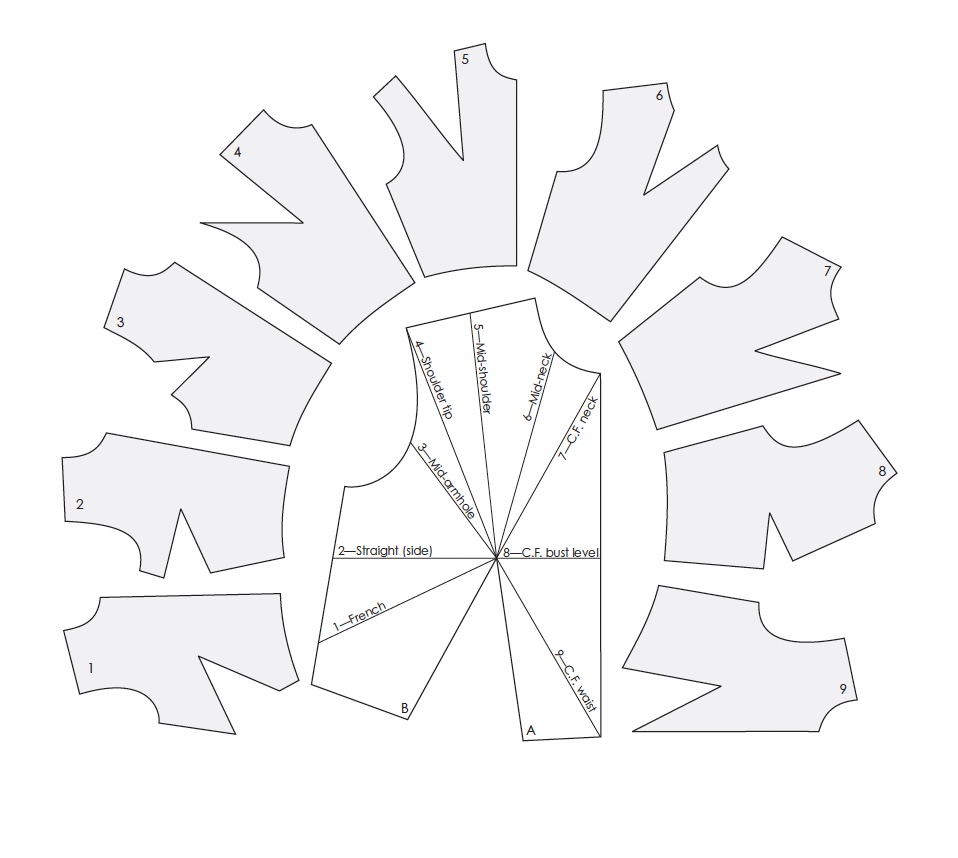
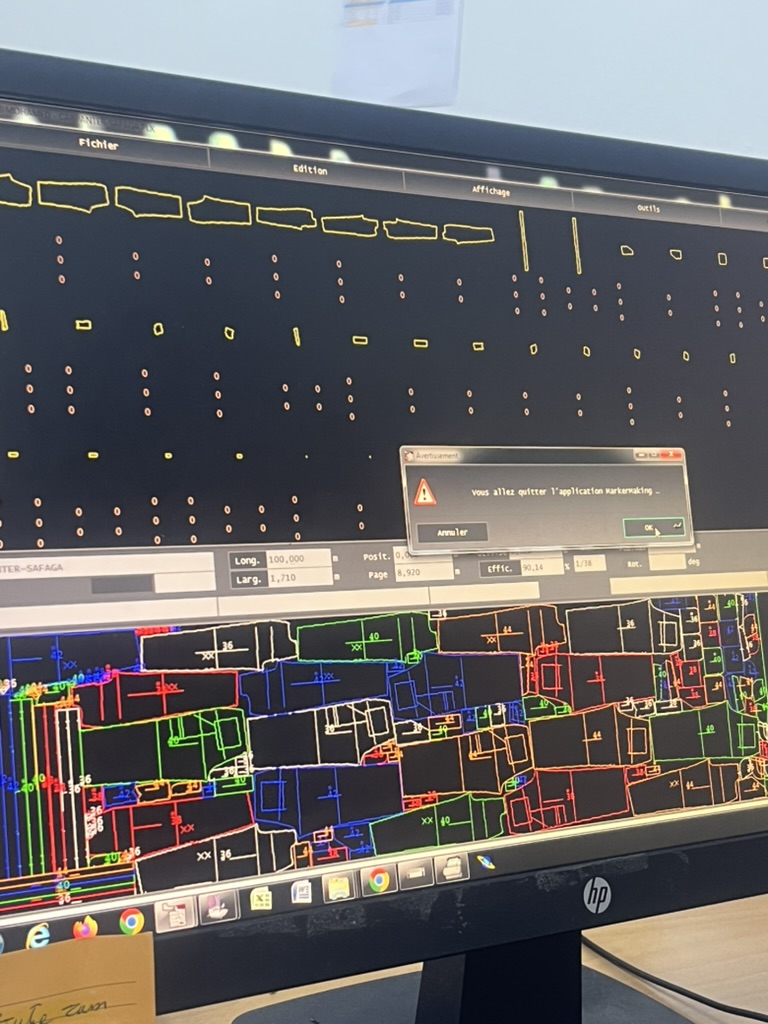
That step depends on pattern making. Pattern making is the translation layer between a design and a factory. A sewing pattern defines every cut, every seam, every measurement. Without it, nothing gets sewn. And today, this process is still overwhelmingly manual.
A skilled pattern maker produces 2 to 5 patterns per day. A factory receiving 200 novel style requests per week cannot keep up. The math simply does not work. This creates sampling delays, iteration backlogs, and a fundamental constraint on how fast the industry can move.
This is where AI has the potential to be transformative, not as a creative aid, but as an engineering solution. Automating pattern generation, grading across sizes, and consumption calculation is where the real productivity multiplier lives. It is not glamorous. It does not make for viral social media content. But it is where the industry's biggest pain point actually sits.
We Are at the GPT-2 Stage
When I presented at HTW Berlin, I made an analogy that I think is important for students to internalize: we are at the GPT-2 stage of pattern-making AI in fashion.
Think about what GPT-2 was. It was released in 2019. It could generate text that was surprisingly coherent, but it was not yet reliable enough for production use. Most people outside of AI research had never heard of it. The people working on it knew something important was happening, but the general public was still years away from experiencing what came next.
That is exactly where pattern-making AI is right now. The core breakthroughs are happening. The systems that will define the next decade of manufacturing are being built today. But they are still early. Most of the approaches currently on the market are fundamentally limited, relying on block libraries and recombination rather than true generative drafting.
The most exciting breakthrough is yet to come, but the path is clear.
Why Most Approaches Won't Scale
During the talk, I walked through the current landscape of pattern-making AI and why many existing approaches are architecturally limited. The short version:
Library-based recombination systems take existing pattern blocks, mix and match sleeves from one, collars from another, and rescale archived silhouettes. They cannot produce a garment construction that does not already exist in their library. For a factory dealing with hundreds of novel requests per week, this is not a solution. It is a slight acceleration of the old workflow.
True generative systems learn drafting logic, geometric relationships, and proportional rules from first principles. They can create constructions that did not previously exist, respect measurement constraints as hard conditions, and extrapolate beyond the training archive.
The difference between these two categories is not incremental. It is architectural. It is the difference between a tool that helps and a tool that transforms.
LA VIPÈRE is taking the second approach, and that is why we are building something fundamentally different. Our system does not ask "what existing pattern is closest?" It asks "what does the geometry demand?" That question leads to a completely different kind of output.
What This Means for Students
If you are a fashion student today, here is what I would tell you:
Learn the fundamentals. Pattern making, construction, fit — these are not going away. AI does not replace the need to understand how garments work. It amplifies that understanding. The students who will thrive are those who know both the craft and the technology.
Think beyond image generation. Everyone is excited about AI-generated visuals. That is the tip of the iceberg. The real transformation is happening in production, in supply chain, in manufacturing. If you understand that layer, you will have a significant advantage.
Get hands-on with the tools. Students at HTW Berlin are getting free access to LA VIPÈRE — more on that soon. The best way to understand what AI can and cannot do is to use it yourself, push its limits, and develop your own intuition for where it excels and where it falls short.
The industry needs you. Fashion tech is one of the most underserved verticals in AI. There are not enough people who understand both fashion and technology. If that intersection excites you, there has never been a better time to be entering the field.
The Future We Are Making
At LA VIPÈRE, we believe the future of fashion is not about replacing human creativity with machines. It is about removing the technical bottlenecks that prevent creative ideas from reaching production. When a designer can go from sketch to production-ready pattern in minutes instead of weeks, the entire industry moves faster, and more ideas get made.
That is the future we are building. And the students I met at HTW Berlin will be the generation that brings it to life.
Huge thanks to Franziska Englberger for the invite and for pushing innovation in fashion education. The technical setup at HTW Berlin is outstanding: digital labs, advanced machines, immersive spaces — and this is a public university. Impressive.